
HRC Fertility’s Dr. Mabel Lee, a reproductive endocrinologist and infertility specialist, was recently featured in a CNN article examining the growing interest in egg freezing and what women should understand when considering fertility preservation.
The article, “AOC joins the growing number of women freezing their eggs. Here’s what to know,” follows U.S. Rep. Alexandria Ocasio-Cortez’s announcement that she is freezing her eggs and uses the conversation as an opportunity to explore how egg freezing works, why more women are considering it, and what patients can expect from the process.
Egg Freezing Continues to Grow
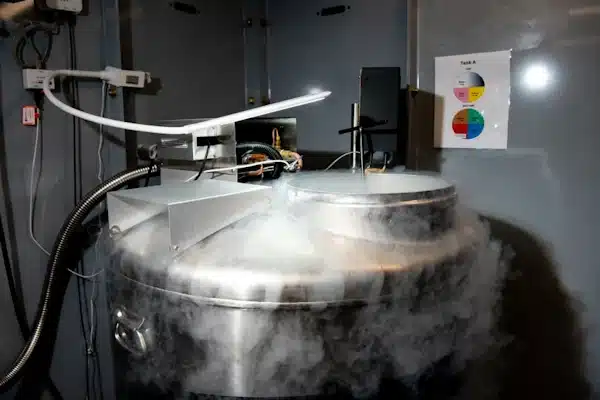
Elective egg freezing, also known as oocyte cryopreservation, allows eggs to be retrieved and frozen for potential use in the future. According to the CNN article, the number of egg retrieval and freezing cycles performed in the United States has grown substantially over the past decade.
Women may consider egg freezing for many different reasons, including educational or career goals, relationships, personal circumstances, or simply wanting greater flexibility when thinking about their reproductive future.
While freezing eggs does not guarantee a future pregnancy, it can provide another family-building option for women who are not currently ready to try to conceive.
More Patients Are Returning to Use Previously Frozen Eggs
As egg freezing has become increasingly common, fertility specialists are also beginning to see more patients return to use eggs they preserved years earlier.
Dr. Lee, who was a co-author of a recent study examining the use of previously frozen eggs, told CNN that she is seeing this trend firsthand in her practice at HRC Fertility.
“Even anecdotally, in my practice, it has become more frequent to have people come in saying, ‘I have eggs frozen from back in the day, and I want to use them now.’”
When a patient is ready to use previously frozen eggs, the eggs can be thawed and fertilized with sperm from a partner or donor through in vitro fertilization (IVF). The resulting embryos may then be evaluated and transferred as part of the patient’s individualized fertility treatment plan.
Is Egg Freezing as Difficult as It Sounds?
For women considering egg freezing, one of the biggest concerns may simply be what the process will be like.
Egg freezing typically involves a period of ovarian stimulation using fertility medications, along with monitoring through bloodwork and ultrasound. Once the eggs have matured, they are retrieved during an outpatient procedure and frozen using a rapid-freezing technique known as vitrification.
Dr. Lee acknowledged to CNN that the daily injections involved in the process can initially sound intimidating. However, she said many of her patients ultimately find the experience more manageable than they anticipated.
“I feel like most of the time, the feedback that I get from patients who are going through this is, ‘oh, that was so much easier than I expected.’”
Understanding the process beforehand and working closely with an experienced fertility team can help patients know what to expect throughout treatment.
Understanding Your Fertility Preservation Options
The growing conversation surrounding egg freezing is helping bring greater awareness to fertility preservation and the importance of understanding reproductive options earlier.
Every patient’s circumstances are different. Age, ovarian reserve, medical history, reproductive goals, and other factors can all play a role in determining whether egg freezing may be appropriate and how treatment should be approached.
At HRC Fertility, physicians such as Dr. Mabel Lee work with patients to evaluate their individual fertility goals and provide guidance about egg freezing, IVF, and other family-building options.
Read the full CNN article, “AOC joins the growing number of women freezing their eggs. Here’s what to know,” to learn more about egg freezing and Dr. Lee’s perspective on the process.